Why This Common Writing Advice is Hurting Writers
The value of a good first draft
This essay was inspired by an interview that I did with God of War: Valhalla co-director Mihir Sheth for Season 3 of the Artwell podcast. Click below to listen to the full interview.
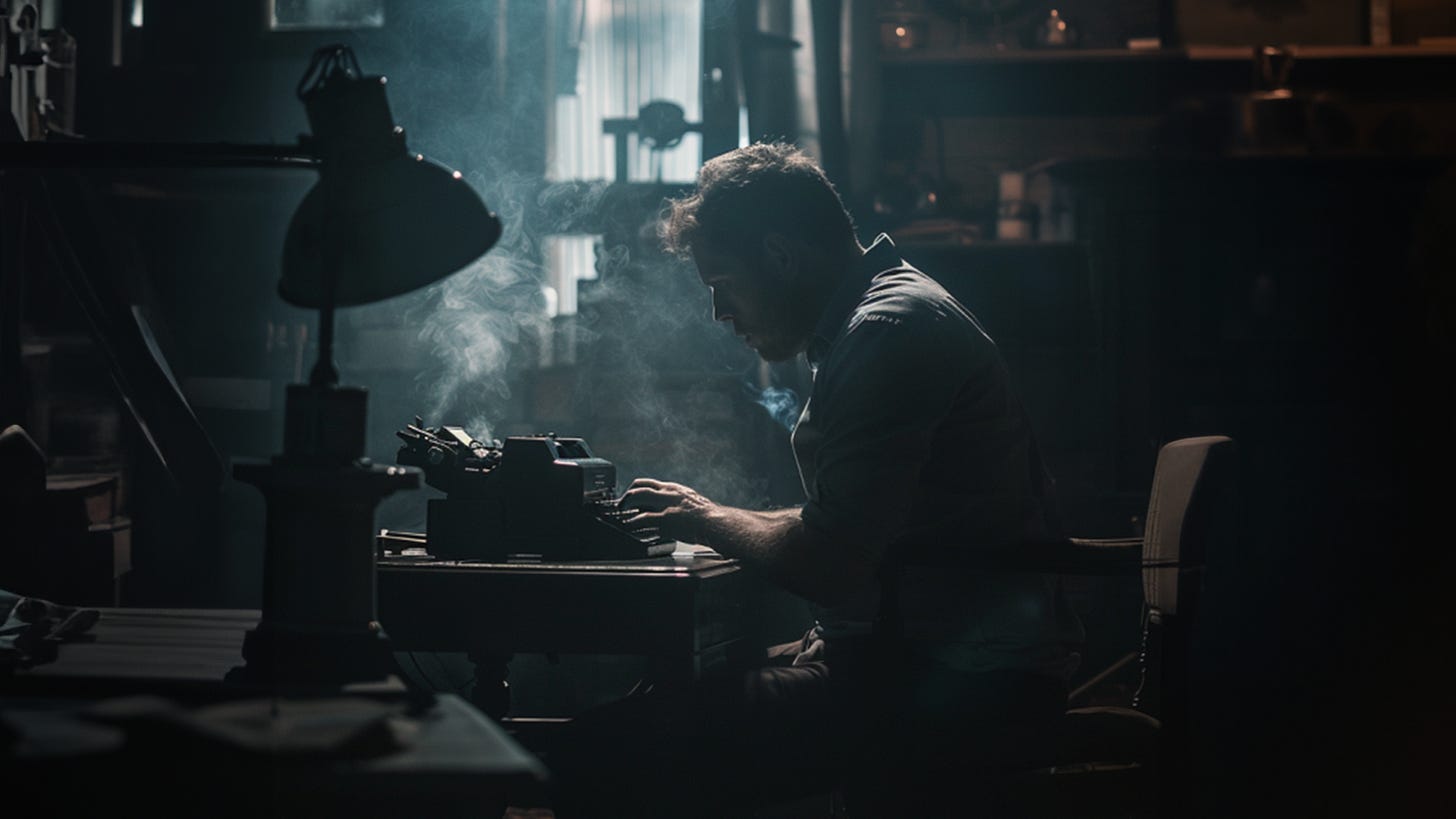
The Value of a Good First Draft
First drafts are hard. There’s few things more daunting than a blank page. While inside of your head, your ideas are safe. It is only when you put them on the page that they must be confronted. When you come face to face with your ideas, you start to notice their flaws. As those flaws start to add up, you start to question whether your great idea is even any good. This is where writers get stuck.
To help them overcome this hurdle they are often given the advice that their first draft is supposed to suck. The idea is that if you expect less of yourself, your ideas can flow more freely. While they may not be very good, they give you something to work with… something less daunting than a blank page. While there is merit to this advice, and it is given with good intent, it is misguided. Writers are interpreting it to mean that the goal of their first draft is for it to be bad. Even asking, “just how terrible is a first draft supposed to be?”
Your first draft is not supposed to be bad. It should be as good as you can make it. That still might not be very good, but that’s okay. You should be more concerned with the quality of your effort, than with the quality of work. When you think what you're making is supposed to be bad, you won’t try as hard. You want to reframe your expectations, not recalibrate how much effort you’re putting in. Don’t fear a bad first draft, but don’t aim for one either.
“The value of a good first pass is often underrated in the current creative zeitgeist where iteration is praised.” – Mihir Sheth
A bad first pass followed by a good second pass accomplishes about as much as a good first pass. If a sculptor uses a paintbrush instead of a chisel for their first draft, it won’t get them very far. Eventually, you have to do the work, it can only be avoided for so long. By trying to make things easy in the beginning, you make them harder later on. If your first draft is supposed to give you something to work with for your second draft, wouldn’t it be better if it was easy to work with?
Putting more effort into your first draft makes it easier to iterate. It’s hard to course correct when you don’t know where you’re going. A bad first pass is directionless, like trying to do a puzzle without ever looking at the picture on the box. A good first pass has intention, you’ve seen the picture and are working towards it. Your first attempt still won’t be perfect, but by knowing what it is that you’re trying to make you can be more deliberate about the changes you implement, only making those that actually bring you closer to your goal.
“If you don't have intent when you do something, how do you know what to change? When you get feedback, if you did something “just because” that doesn't help you move forward. If you come at it being like, it has this because of this. I did this because of this. Now, when you get some feedback, you can correlate the feedback to the intention that you had, and then you can develop some kind of strategy for how to move forward.” – Mihir Sheth
Focusing on effort leads to better quality. Focusing on quality does not lead to better effort. You can work twice as long on something and it won’t get any better. But if you work twice as hard, you’ll see an improvement. While there are many factors that can impact the output of the first draft, you are in complete control of the input.
Your level of effort is linked to your level of care. It is not uncommon for a writer to have the attitude of, “It doesn’t matter, it's just the first draft”. This is an ego defense mechanism, because you can shrug off its flaws as “intentional”. It separates you from the work and makes it the draft that sucks, and not you. You weren’t even trying, so it’ll become much better when you actually do.
You have to acknowledge that iteration is going to get you there, but don't devalue the intent that you put into a first pass.” – Mihir Sheth
If you can make it better later, why not make it better now? You don’t have to kick that can down the road. If you do, you’ll end up kicking yourself for the mess you left the future you to deal with. There will always be things to clean up but it can be lessened with a bit more intention. Edits and iterations will improve your work but how much of an improvement they make, is directly linked to the quality of the work they’re improving.
A bad first draft lowers the quality of your second draft. If you set the bar low, it won’t take much to surpass it. While you’ll still be getting better, your rate of improvement will be slower than if you’d started out with a good first pass. A 50% improvement on a first draft that has a quality score of 2/10, will leave you with a second draft that is 3/10. But if you’d put in twice the effort on your first pass, you would have ended up with a score of 4/10. Once you factor in a 50% improvement, your second draft would be a 6/10. Over time the value of a good first pass compounds to help you reach your end goal quicker.
“It could just be bad for a long time and you can do 10 iterations and spend a lot of time and money.” – Mihir Sheth
When quality is your aim it’s really easy to get discouraged. No matter how hard you try, your first draft probably won’t be very good. While 4/10 is better than 2/10, nobody would argue that that’s a desirable score. That doesn’t mean you should accept mediocrity and do less than you’re capable of. While odds are your first draft won't be perfect, it’s not something to be careless with either. It is the ground that all future drafts are built upon, and without a good foundation, the whole thing can come crumbling down.
Thanks for reading! If you haven’t already, make sure you subscribe to the newsletter for more essays that help you become a more thoughtful artist. If you want to learn more about God of War, you’ll like Season 3 of the Artwell podcast where I studied the making of the games and interviewed its creators to find lessons that are relevant for modern creatives.